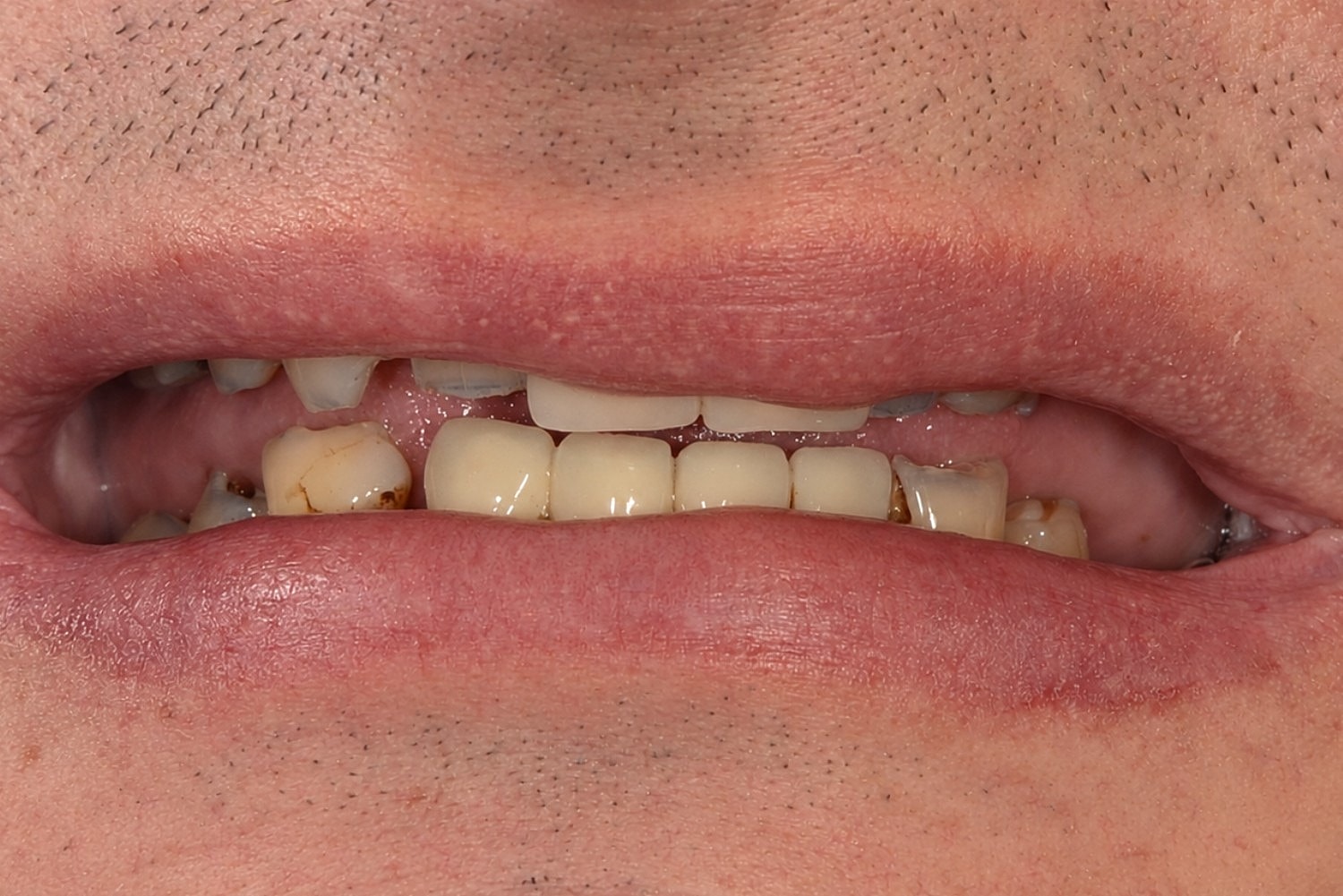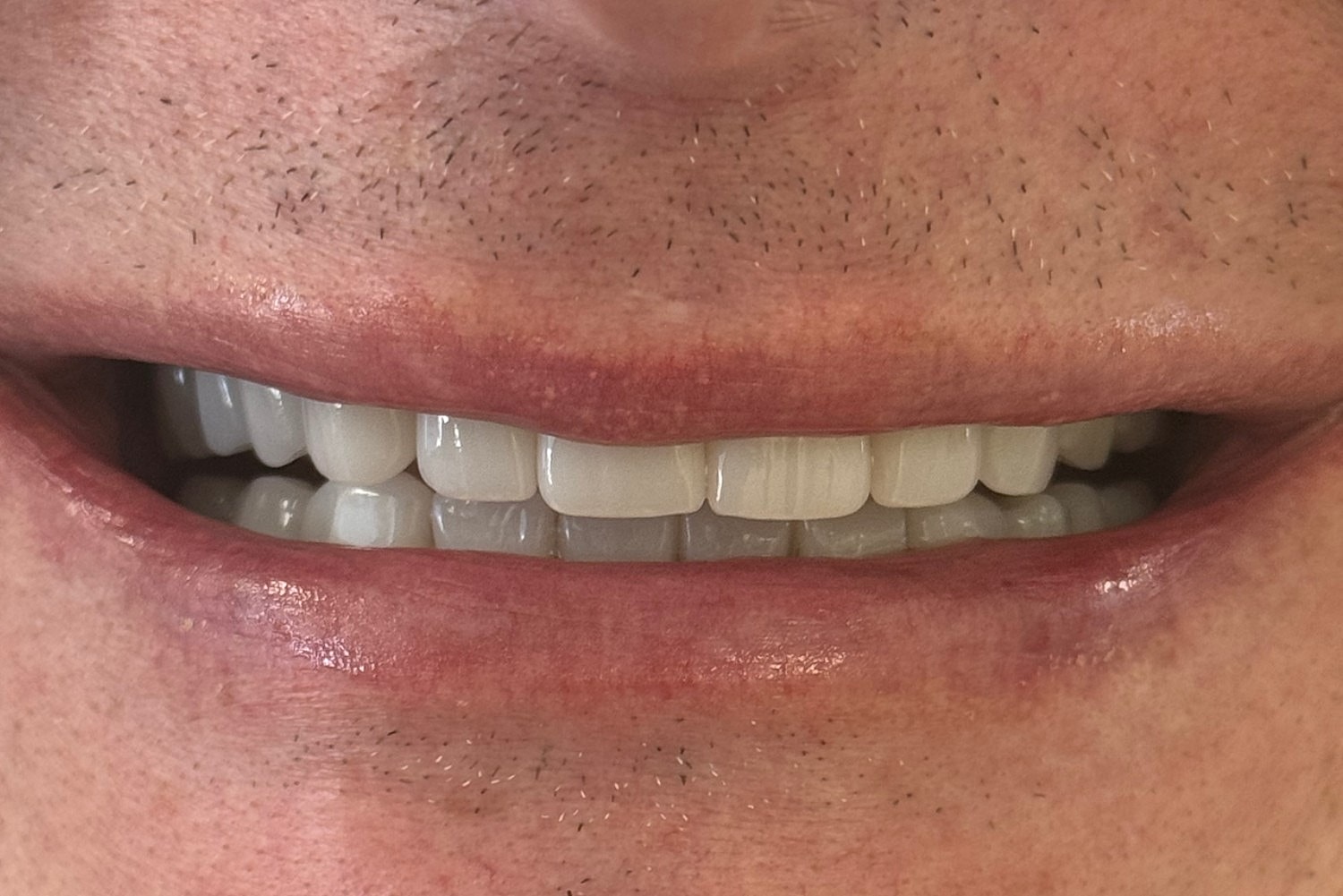
Full Mouth Reconstruction
Serving Chevy Chase, Washington, DC, and the surrounding area


A smile can look worn and still not tell the full story. The real problem may be structural. Teeth break more easily. Old crowns begin to fail. Chewing becomes less comfortable. The bite no longer feels settled. What looks like a series of separate dental issues is often one larger pattern.
Full mouth reconstruction isn’t just about making teeth look good. It’s about fixing and restoring the overall structure and health of your mouth.
Dr. Azin Ghesmati approaches full mouth reconstruction with the same meticulous care that defines her work at Chevy Chase Digital Dentistry. Her objective is to identify what has deteriorated, protect what remains healthy, and reconstruct only what is necessary for each individual case. For some patients, this involves addressing advanced decay and restoring damaged teeth. For others, it could mean replacing missing teeth, correcting bite issues, rejuvenating worn surfaces, or carefully planning treatment in multiple phases. The treatment is thorough because the issues at hand are complex.
Dr. Ghesmati brings an engineer’s way of thinking to clinical care. In full mouth reconstruction, that becomes especially important. Function, force, material choice, oral health, and long-term stability all have to work together. A reconstruction should do more than improve appearance. It should restore oral function in a way that holds up in daily life.
1 of 1
Full mouth reconstruction is a customized treatment plan used to rebuild the teeth, bite, and overall function of the mouth when there is significant wear, damage, tooth loss, or structural breakdown.
Mouth reconstruction is often seen as a single procedure; however, it actually consists of a series of restorative options performed in a specific order. This process considers the condition of the teeth, gums, jawbone, bite, and any existing dental work. Treatment options may include dental crowns, implants, bridges, periodontal care, or root canals. In some cases, orthodontic treatment may be necessary before final restorations can occur. Additionally, some approaches may be more conservative than patients expect.
At Chevy Chase Digital Dentistry, mouth rehabilitation is not built from a template. It is built on diagnosis. The treatment has to solve the current problem. It also has to make sense years from now.
Patients reach this point for different reasons. Some have had years of wear. Some are dealing with repeated fracture and repair. Some have missing teeth, a collapsing bite, or a history of dental work that no longer functions well together. Treatment may be recommended when there is:
Some patients come in because they are in pain. Others come in because things have become progressively harder to ignore. Eating feels different. Teeth are shortening. The bite is shifting. A smile that once felt stable no longer does. What seems like a collection of minor issues has started to affect comfort, chewing, and confidence.
That is usually when it becomes clear that the problem is no longer isolated.
One failing tooth can be treated in isolation. A failing system cannot.

The concept of full mouth rehabilitation is based on a holistic approach. If wear is affecting your bite, merely replacing a single crown won’t solve the larger issue. Similarly, if multiple teeth are breaking due to the same forces, addressing each one individually could lead to a cycle of recurring problems. Furthermore, when a tooth is missing, it can change your bite, causing the surrounding teeth to bear the consequences.
This is why the full mouth reconstruction Washington, DC patients receive at our practice is approached as a unified case. Dr. Ghesmati carefully assesses what is healthy, what is unstable, where the bite is deteriorating, and determines the most effective treatment sequence to restore oral function while avoiding new complications.
A comprehensive plan does not mean aggressive treatment for its own sake. It means the dentistry is being done with the full picture in view.
A full mouth case is not one procedure. It may involve several restorative disciplines working together.
Dental crowns may be used to rebuild teeth that have lost significant structure through fracture, wear, decay, or previous dentistry. When the remaining tooth needs protection, a crown can restore contour, strength, and function.
When teeth are missing or cannot be predictably saved, dental implants may be used to restore support, chewing function, and continuity in the bite. They also help preserve the jawbone in areas where tooth loss has already occurred.
Dental bridges remain an important restorative option in the right case, especially when the surrounding teeth and the larger treatment plan support that choice. Bridges can help fill gaps and restore function when one or more teeth are missing.
Some areas may be best restored with bonded restorations, inlays, onlays, or other restorations that preserve more healthy structure. A mouth reconstruction depends on what each tooth can still support.
When an infection has reached the inside of a tooth, root canal treatment may be needed before the tooth can be restored properly. Preserving natural teeth when possible is still an important part of reconstruction.
For some patients, dentures or partial dentures remain appropriate restorative options, depending on the number of teeth involved, the health of the gums, and the broader treatment plan.
If gum disease or instability is present, the health of the gums has to be addressed before definitive restorative work begins. A stable foundation matters in every mouth restoration case.
At Chevy Chase Digital Dentistry, the process of full mouth reconstruction starts with a thorough diagnosis rather than immediate treatment.
During the consultation, we conduct a detailed evaluation of the teeth, gums, bite, existing restorations, and the overall function of the mouth. Some patients come in aware of multiple dental issues, while others believe they only need one or two repairs, only to later discover how interconnected their problems really are. For example, a cracked tooth might indicate an underlying bite issue. Missing teeth can alter the distribution of forces in the mouth, and worn edges may signal years of instability rather than merely a cosmetic problem.

Dr. Ghesmati plans these cases with careful attention to sequence. That matters because the order of treatment changes the result. A tooth may need to be stabilized before it can be restored. The bite may need to be clarified before final crowns or bridges are placed. Infection, decay, gum health, tooth replacement, and structural compromise all have to be accounted for in the right order.
Her background in computer software engineering and project management still informs the way she works. She approaches complex cases systematically. She studies how the parts relate to one another. She builds treatment around the patient’s unique needs, not around a routine formula.
Precision becomes more important as cases become more complex.
Modern dentistry and advanced digital planning support the way full mouth cases are diagnosed, mapped, and executed. Imaging, scanning, and digital records help Dr. Ghesmati evaluate the teeth, bite, and supporting structures with greater clarity. That improves the quality of the treatment plan and the way final restorations fit and function.
Patients may notice efficiency or comfort during the process. The larger value is accuracy. In a case involving multiple teeth and a changing bite, small errors do not stay small.
Most people who come in for our Washington, DC full mouth reconstruction notice the first change is not always cosmetic. Some patients notice that chewing feels more stable. Others notice that certain teeth are no longer carrying all the force.
Some patients notice that chewing feels more stable. Others notice that certain teeth are no longer carrying all the force. The mouth feels less strained. Eating is easier. The bite settles more evenly. Then the visual changes begin to register: worn teeth look restored, older dental work no longer draws the eye, and the smile looks more complete.
That is usually the right sequence. A functional smile has to function first. The aesthetics should follow naturally from that structure.
A full mouth reconstruction is rarely completed in a single visit. The timeline for treatment depends on several factors, including the condition of the mouth, the number of teeth involved, whether implants or periodontal treatment are necessary, and the staging of the case. While some plans may progress more quickly than patients expect, others require careful, gradual development over time. It's essential to focus not just on the speed of treatment, but also on the sequence of procedures.
The cost of reconstruction follows a similar pattern. A comprehensive treatment plan may involve multiple procedures, various phases, and different types of restorations. During the consultation, Dr. Ghesmati will explain what the case entails, including the associated risks and benefits, and how the treatment will be staged. The most accurate cost estimate is based on the specific condition of the mouth rather than a generic figure.
With proper maintenance, regular cleanings, and long-term follow-up, well-planned restorative work can be very effective and last for many years.
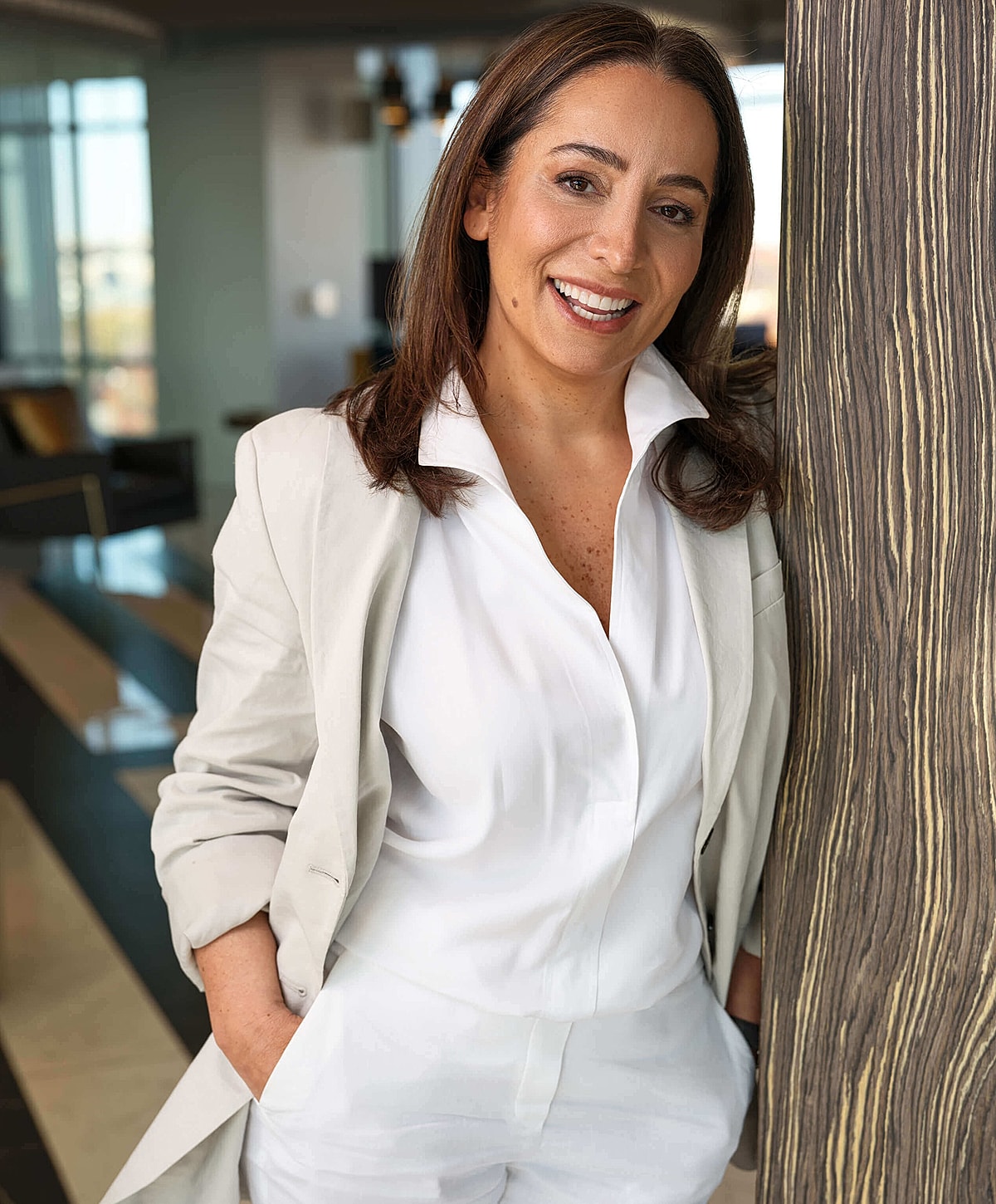
Dr. Azin Ghesmati is recognized for her precise and methodical approach to complex dental care. In her work on full mouth reconstruction, she emphasizes the importance of thorough diagnosis, structural reasoning, and a commitment to preserving what can still be saved.
Before pursuing a career in dentistry, she studied software engineering and worked in project management. This background continues to influence her practice today. She carefully evaluates each case, plans with intention, and avoids making piecemeal decisions when a comprehensive view is necessary.
Patients often remark on how composed and organized the entire process feels. The standards are high, the treatment plan is clear, and nothing feels rushed or exaggerated.
If you are dealing with worn teeth, missing teeth, bite issues, or a pattern of dental problems that no longer feels manageable one tooth at a time, a full evaluation is the right place to start.
To schedule your consultation for full mouth reconstruction in Washington, DC, contact Chevy Chase Digital Dentistry.